
2026 Illinois Garden Trends: Drought-Tolerant + Low Maintenance Landscapes That Still Look Lush
2026 Illinois Garden Trends: Drought-Tolerant + Low-Maintenance Landscapes That Still Look Lush
A smarter way to landscape through an Illinois summer
If you live in Illinois, you already know the pattern. Spring: everything is green. June: the sprinklers go on. July and August: brown patches, high water bills, and that guilt every time you hose down the driveway.
Modern drought-tolerant landscaping is not a yard full of gravel and cacti. It is lush color, pollinators, texture and curb appeal that can use 50–70% less water once plants are established.
The Illinois Water Problem No One Talks About
Illinois summers are getting hotter, municipal water rates are climbing, and homeowners are busier than ever. Nobody wants to hand-water petunias every night after work.
That is why the number-one garden trend landscapers are pushing in 2026 is drought-tolerant, low-maintenance landscaping. Whether you have a quarter-acre in the suburbs or a small Chicago neighborhood lot, the goal is to work with the Midwest climate instead of fighting it.
Lower water use
A traditional bluegrass lawn can need 1–1.5 inches of water per week in July. Water-wise plantings need a fraction of that after their first year.
Built for the swings
USDA zones 5a–6b mean winter lows near −20°F and humid summer highs around 95°F. Native plants are adapted to both extremes.
More time back
With the right design, four-plus hours of weekly summer care can drop to under one. Mow less, weed less, water less and enjoy more.
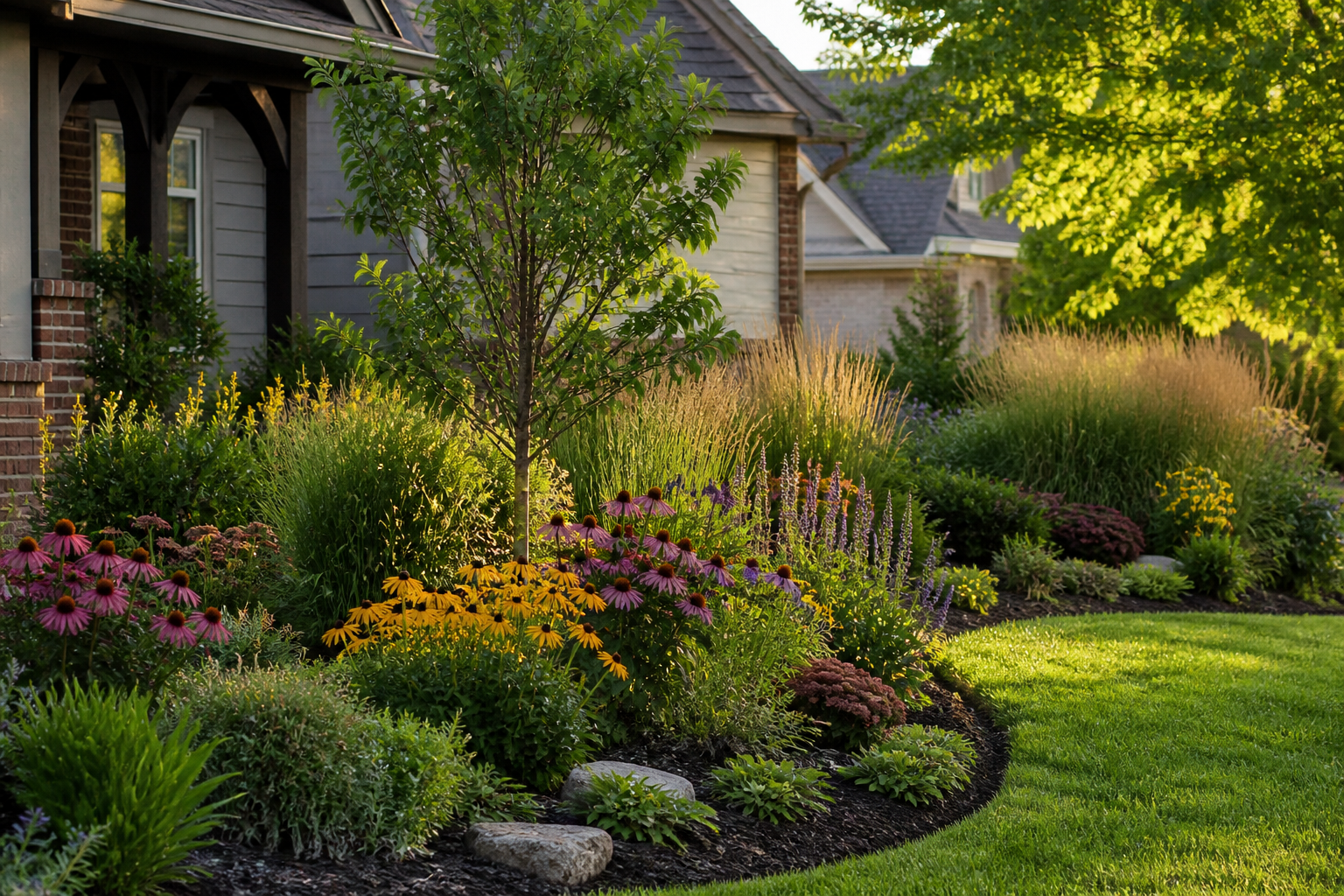
A water-wise yard can still feel generous and alive. Layer native flowers, ornamental grasses, trees and curved planting beds so the landscape looks intentional from the street and welcoming up close.
Once roots are established, the garden does more of the work itself: surviving heat, supporting pollinators and keeping four-season structure without constant replacement.
The 2026 Illinois Plant Palette
Forget xeriscaping stereotypes. The plants trending in Illinois are native and adapted perennials that look lush, not desert-like.
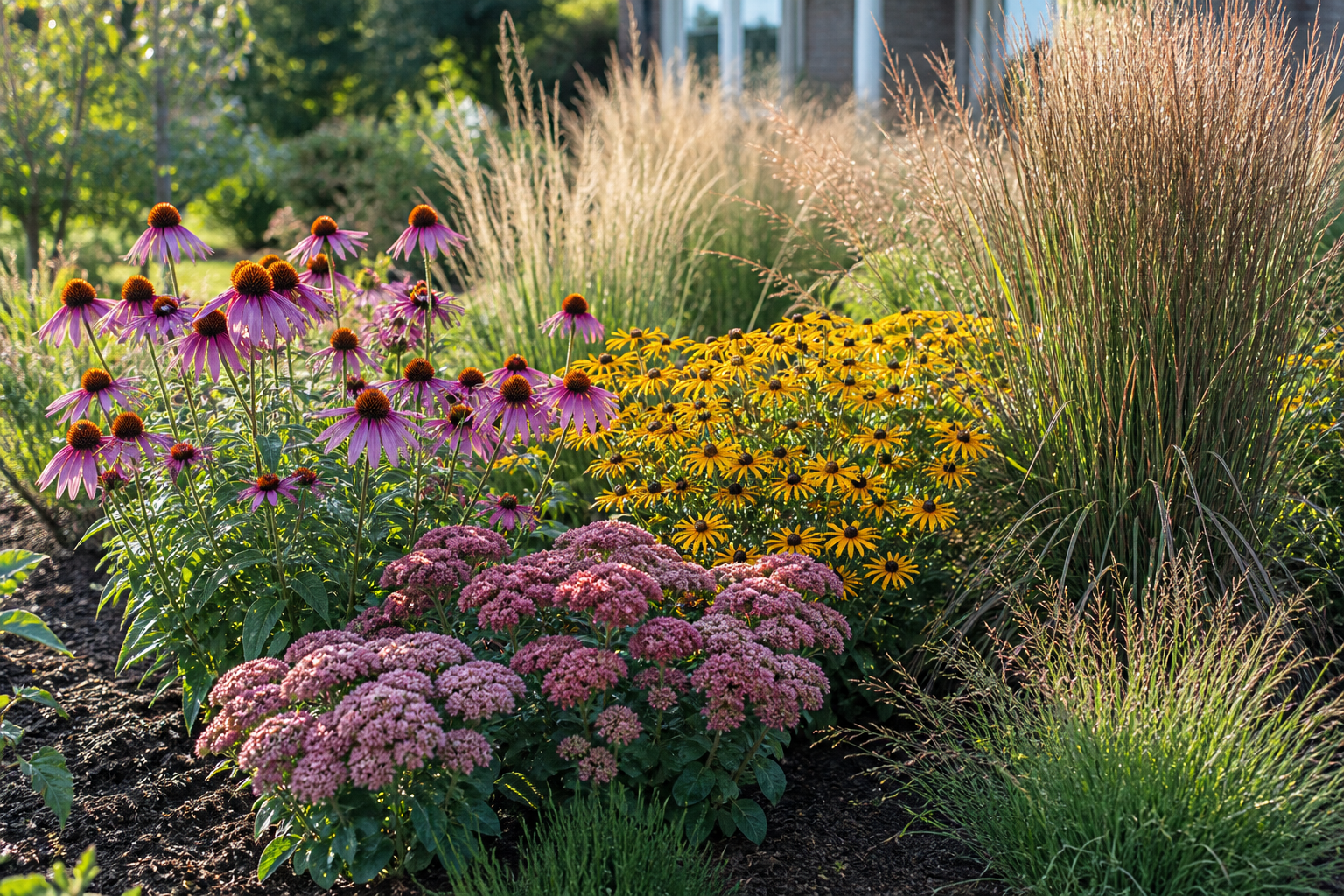
- Coneflower — Echinacea purpurea: Blooms from July to September, handles heat and gives goldfinches seed heads in fall.
- Little Bluestem — Schizachyrium scoparium: Blue-green in summer, copper-orange in fall and upright through snow.
- Sedum ‘Autumn Joy’: Heat-loving succulent with pink-to-rust flower heads that bees visit late in the season.
- Black-eyed Susan — Rudbeckia hirta: A long-blooming yellow native that pairs beautifully with purple coneflower.
- Serviceberry — Amelanchier arborea: White spring flowers, edible berries, orange fall color and winter bark in one compact tree.
Pro landscaper tip: group plants by water need. Put thirstier plants near downspouts and drought-tolerant plants on berms or slopes.
Three inches of shredded hardwood mulch can cut evaporation by about 50%.
Design Tricks That Sell
The difference between a messy native patch and a high-end landscape is design. These are the details that make a drought-tolerant yard feel polished.
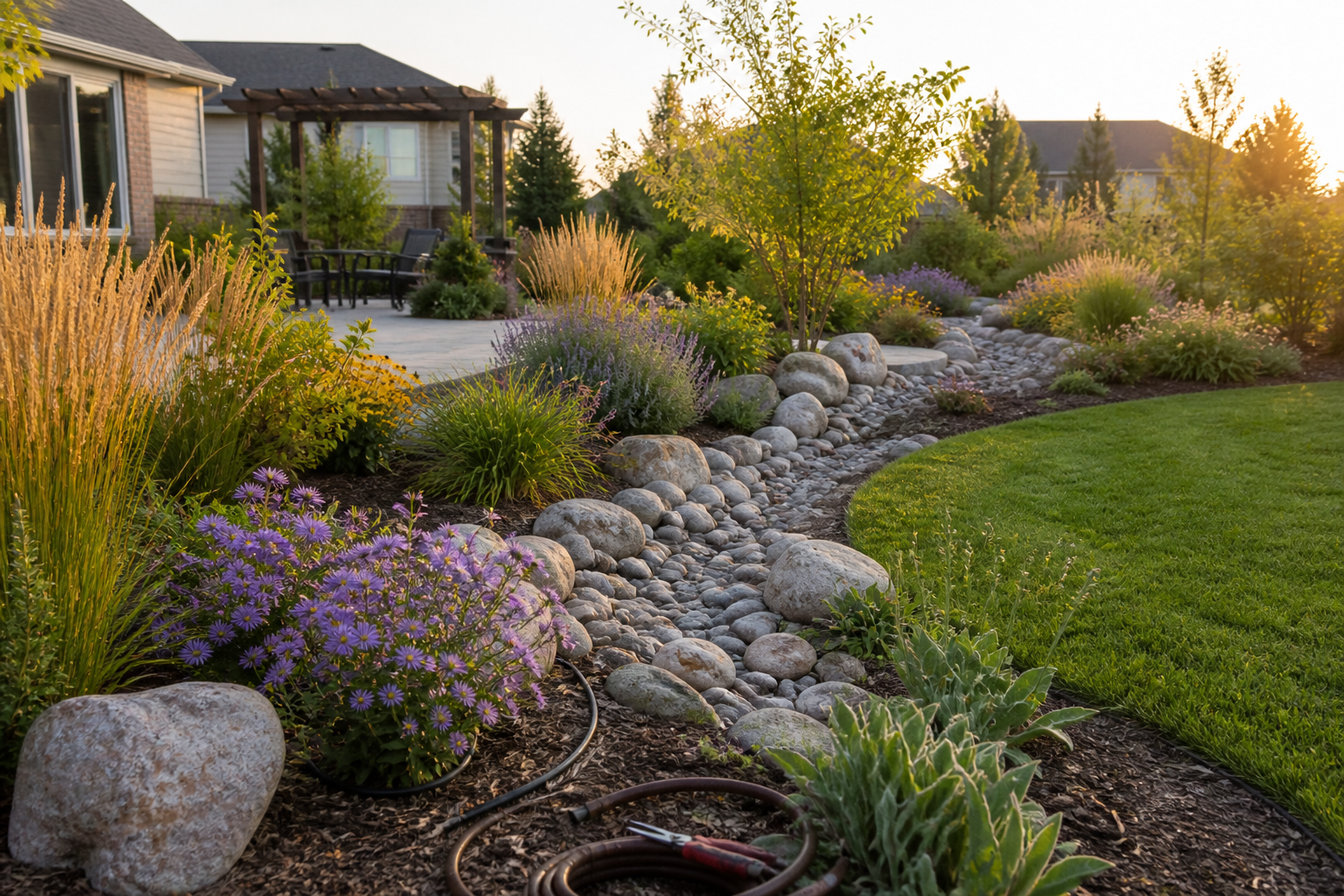
- Reduce lawn by 30%: Keep room for kids and dogs, then use curved planting-bed edges to make the whole yard feel larger.
- Add a dry creek bed: A shallow swale with river rock solves drainage problems and becomes a feature when dry.
- Layer height and texture: Tall grasses in back, mid-height coneflowers in the middle and low sedum in front.
- Use drip irrigation for year one: Deep, infrequent watering helps roots establish before the system is turned down or off.
- Create a pollinator pathway: A small “Certified Pollinator Garden” sign turns sustainability into a neighborhood talking point.
Common Mistakes Homeowners Make
DIY drought gardens fail often in Illinois because the hardest part is not choosing a pretty plant. It is understanding the site, the soil and the mature size of every plant.
Wrong soil prep
Illinois clay can hold water in spring and bake to concrete in August. A soil test, compost and proper drainage protect roots from both extremes.
Planting too close
One-gallon plants can be four feet wide in two years. Professionals space for mature size so the bed fills in without becoming a jungle.
No establishment plan
Year one is critical. Deep, infrequent watering forces roots down while a care plan prevents both over-watering and neglect.
Wrong cultivar
Not every coneflower or hydrangea performs the same. Choose cultivars tested for Midwest wind, humidity and disease pressure.

You are not only buying plants. You are buying site analysis, drainage planning, local sourcing, correct installation depth, mature-size spacing, mulch and edging that work together.
The right professional also gives you an establishment schedule and a warranty or maintenance plan, so the landscape has a better chance of thriving through its first Illinois summer.
How This Adds Value to Your Illinois Home
Water-wise landscaping is becoming a selling point across the Chicago suburbs and beyond. Buyers increasingly ask two practical questions: “How much is the water bill?” and “How much maintenance does this yard need?”
| Landscape upgrade | What it changes | Long-term value |
|---|---|---|
| Native perennial beds | More color and pollinator activity with less annual replacement. | Lower replanting costs |
| 30% lawn reduction | Less mowing, fertilizing and weekly watering. | Up to 75% less care time |
| Mulch + grouped water needs | Less evaporation and smarter irrigation zones. | Lower summer water use |
| Four-season structure | Spring flowers, summer color, fall texture and winter interest. | Stronger curb appeal |
- Start with a soil and drainage assessment.
- Group plants by their water needs.
- Keep the lawn where it earns its space.
- Build height, texture and seasonal interest.
- Mulch three inches deep with shredded hardwood.
- Use drip irrigation to establish new plantings.
- Choose cultivars proven for Midwest conditions.
- Ask for a maintenance schedule or warranty.
Your Yard Can Work Smarter in 2026
Illinois weather is not getting easier. But your landscape can. With the right plants, soil preparation, water strategy and design, you can keep the lush look you want while spending less time watering, mowing and replacing plants.










Leave a Reply